




lead-free piezoelectric ceramics
The new lead-free piezoelectric ceramic replaces PZT and is suitable for ultrasound, flaw detection, medical and other fields.
Type
Tags
Solution maturity
Mass promotion / Mass production
Applicable industry
Applications
Key innovations
The innovation of this product lies in the development of two new types of lead-free piezoelectric ceramic systems, which have excellent piezoelectric properties and unique application advantages. They can replace traditional PZT materials and have been put into production in small batches and applied in multiple fields.
Potential economic benefits
Lead-free piezoelectric ceramics can replace PZT materials, reduce production costs and improve product performance. When applied to ultrasonic thickness measurement, ranging and other fields, it can improve testing accuracy and efficiency, expand market application scope, promote the development of related industries, and bring significant economic benefits.
Potential climate benefits
Lead-free piezoelectric ceramics reduce lead pollution and indirectly promote resource recycling. Its efficient energy conversion characteristics reduce energy consumption, especially in medical diagnosis and industrial testing, improve equipment efficiency, thereby achieving carbon reduction benefits.
Solution supplier
View more

Shanghai Silicate Institute
Shanghai Silicate Institute is a national-level research institution for inorganic non-metallic materials, focusing on the research and development of advanced ceramics and serving high-tech applications such as aerospace and energy.

China
Solution details
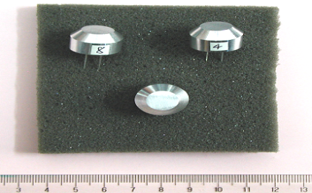
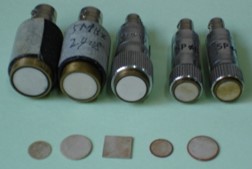
Lead-free piezoelectric ceramics are applications in piezoelectric transducers, accelerometers and buzzers. Two new types of lead-free piezoelectric ceramic systems have been successfully developed: sodium bismuth titanate-based and potassium sodium niobate-based new lead-free piezoelectric ceramic systems. Sodium bismuth titanate-based lead-free piezoelectric ceramics have piezoelectric characteristics such as high Kt, low Kp, small dielectric constant and bulk density, and moderate Qm; Alkali metal niobate lead-free piezoelectric ceramics have the unique advantages of making narrow pulse probes and high-resolution probes, and can replace the past PZT piezoelectric materials. Currently, they have been put into production in small batches on the production line and provided to domestic manufacturers. Transducer used in ultrasonic thickness measurement, ranging, industrial flaw detection and medical diagnosis.
Last updated
10:58:25, Nov 04, 2025
Information contributed by
See original page on
Report