



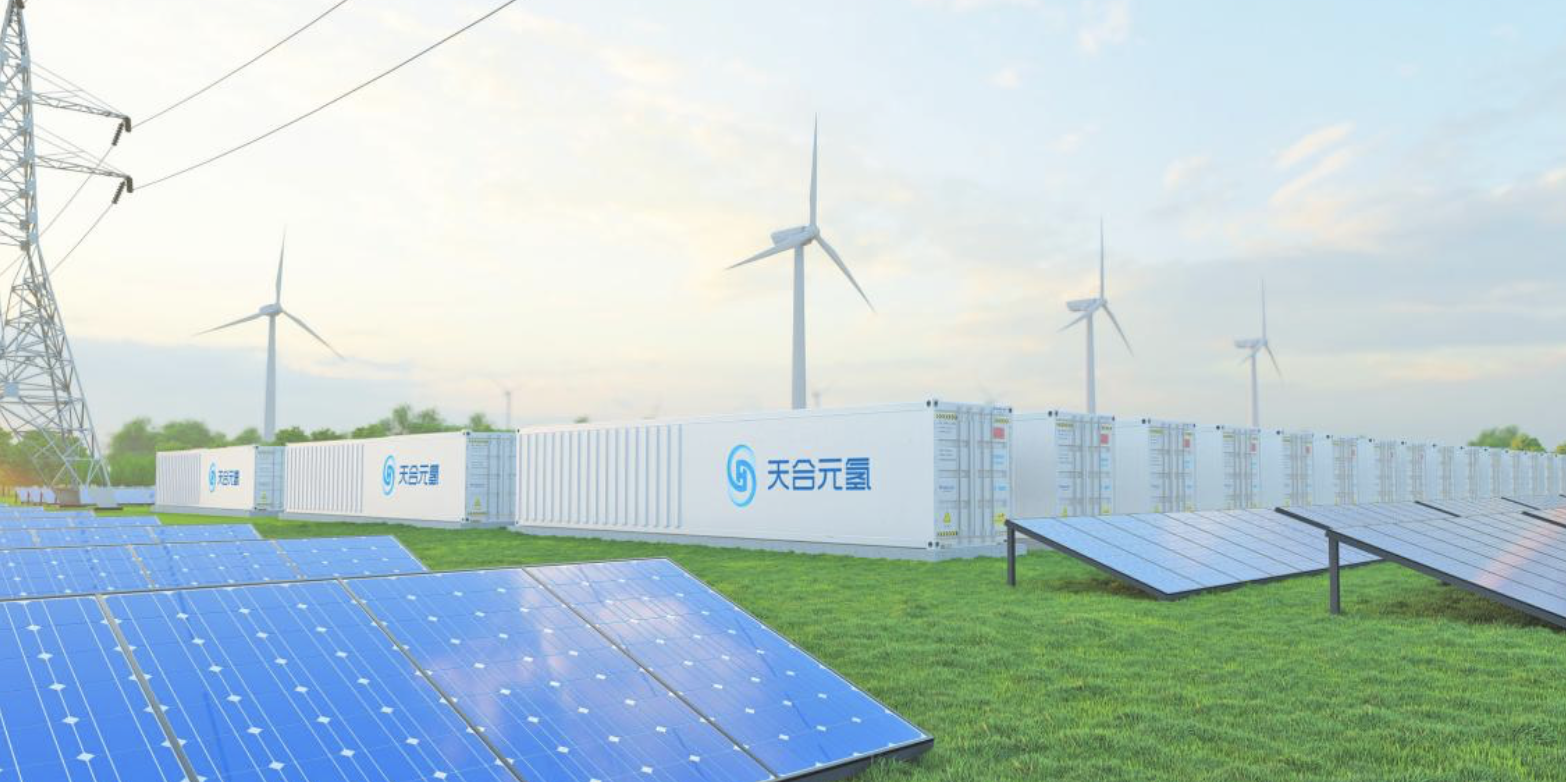
"Tianqing" electrolytic cell series
Equipment manufacturing enterprise with electrolysis of water as its core to hydrogen production technology
Type
Tags
Solution maturity
Mass promotion / Mass production
Applicable industry
Case studies
Key innovations
Tianqing electrolytic cell has a hydrogen production capability with wide power fluctuations of 25%-120%. With unique control technology, it can better adapt to renewable energy power.
Potential economic benefits
Compared with traditional electrolytic cells, the operating current density of the "Tianqing" alkaline electrolytic cell is increased by about 50%-75%, the DC power consumption is reduced by 10%-15%, the volume of the electrolytic cell is reduced by 30%, and the equipment cost is reduced by 15%. It has high density and low energy consumption characteristics are more in line with the development needs of green electricity.
Solution supplier
View more

Tianhe Yuanhydrogen
Equipment manufacturing enterprise with electrolysis of water as its core to hydrogen production technology
Solution details
The main technical indicators such as single unit hydrogen production, electrolysis efficiency, and current density have all reached the domestic advanced level. The single tank hydrogen production delivered this time is 1000 Nm ³/h, and the energy consumption meets the national first-level energy efficiency standard. Compared with traditional electrolytic cells, the operating current density of the "Tianqing" alkaline electrolytic cell is increased by about 50%-75%, the DC power consumption is reduced by 10%-15%, the volume of the electrolytic cell is reduced by 30%, and the equipment cost is reduced by 15%. It has high density and low energy consumption characteristics are more in line with the development needs of green electricity. Its unreleased series of products can produce up to 2000 Nm ³/h hydrogen in a single tank. Tianqing electrolytic cell has a hydrogen production capability with wide power fluctuations of 25%-120%. With unique control technology, it can better adapt to renewable energy power. At the same time, Tianqing system adopts modular design, frame-type product structure, and standard module integration to adapt to large-scale rapid deployment. The alkali tank framework has a multi-to-one design to further reduce the unit system cost of hydrogen production. Under comprehensive circumstances, equipment investment can be reduced. 30%, achieving a more reliable technical foundation for obtaining green hydrogen on a large scale and at a lower price. Overall, the "Tianqing" alkaline electrolyzed water hydrogen production system integrates the characteristics of high power, high efficiency, intelligence, long life, and strong environmental adaptability, and can meet the application needs of multiple scenarios. It can be used for power generation, automobiles, ships, aviation and other fields, hydrogen can also be produced as fuel gas or chemical raw material into production. It can also be used in hydrogen blending in natural gas pipelines and building heating to further assist carbon neutrality.
Last updated
11:00:16, Nov 06, 2025
Report